
Exporting to Africa: Opportunities and Challenges After the Implementation of the AfCFTA
 By
By 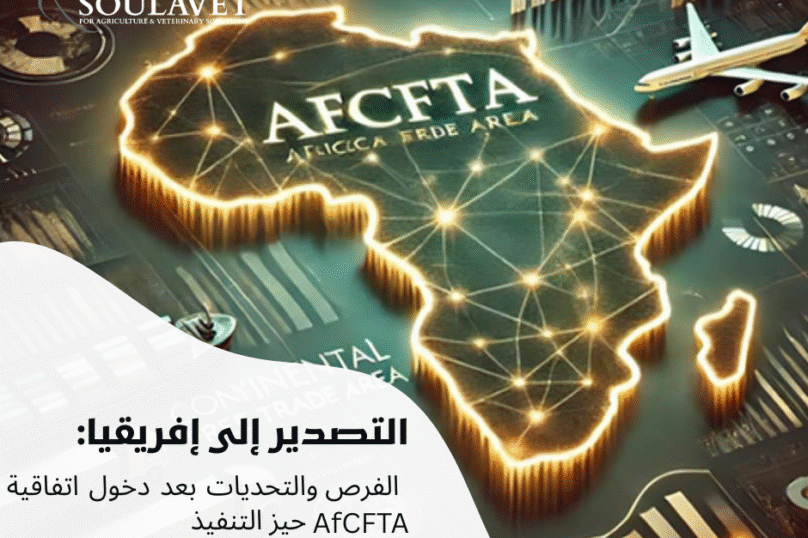
By Dr. Mahmoud Amin — Marketing and International Trade Consultant, SOULAVET
Executive Summary
The African Continental Free Trade Area (AfCFTA) represents a historic opportunity to enhance intra-African trade and open vast markets for Egyptian exporters. After the agreement entered into force on May 30, 2019, and trade officially began under its framework on January 1, 2021, the landscape has gradually shifted from reliance on traditional markets toward creating regional value chains and greater opportunities for industrial integration.
Despite its enormous potential, both countries and exporters face a series of logistical, regulatory, financial, and standards-related challenges that require precise and practical strategies to unlock real value. ([African Union][1], [wcoomd.org][2])
1. Brief Historical and Legal Overview (Key Dates)
- March 21, 2018: Adoption of the AfCFTA text by the African Union Summit.
- May 30, 2019: The AfCFTA officially entered into force after the required number of ratifications were deposited.
- January 1, 2021: Launch of preferential trade under the AfCFTA (the first operational phase).
These milestones transformed the AfCFTA from a concept into a legal and operational framework that demands concrete national and regional implementation steps. ([African Union][1])
2. Why the AfCFTA Matters for Egyptian Exporters Now
- A Unified Market: Over 1.4 billion consumers and growing intra-African trade represent a massive opportunity for Egyptian manufactured and agricultural goods.
- Broad Tariff Elimination: The agreement aims to reduce or eliminate customs duties on about 97% of goods according to an agreed schedule — improving competitiveness for exporters meeting the Rules of Origin requirements. ([African Union][1])
- Creation of Regional Value Chains: Instead of exporting only raw materials, Egypt can invest in regional value chains (assembly, packaging, manufacturing) that serve both local and regional demand with operational and customs benefits.
3. Egypt’s Trade Position with Africa — Recent Data and Evidence
- Official data show that Egyptian exports to African Union countries reached about USD 7.4 billion in 2023, rising further in 2024 to around USD 7.7 billion, a notable year-on-year growth reflecting widening opportunities across the continent. ([See News][3], [SIS][4])
- According to Afreximbank analyses, the top African markets for Egyptian exports during 2022–2023 were Libya, Sudan, Algeria, Morocco, and Tunisia, mainly in sectors such as building materials, chemicals/fertilizers, and food products. This concentration in North Africa highlights the potential for expansion westward, eastward, and southward. ([media.afreximbank.com][5])
4. Promising Sectors for Egyptian Exports Within Africa After the AfCFTA
- Construction and Building Materials: Cement, gypsum, and refractory products — with high demand in countries undertaking major infrastructure projects, especially Libya and Sudan. ([Daily News Egypt][6])
- Processed Food Products: Packaged foods and agro-industrial products due to rising demand in Central and East African markets. ([media.afreximbank.com][7])
- Fertilizers and Agricultural Chemicals: Expanding agricultural sectors in West and Southern Africa offer great opportunities. ([media.afreximbank.com][7])
- Textiles, Leather, and Consumer Chemicals: Growth potential if competitive pricing and quality standards are met. ([media.afreximbank.com][7])
5. Practical Challenges — Why the Transition Won’t Be Easy
A. Non-Tariff Barriers (NTBs) and Standards
A significant number of administrative and sanitary barriers (SPS), calibration and documentation requirements, and differences in national technical regulations can prevent exporters from benefiting from tariff advantages. Managing these standards requires investment in testing, conformity certification, and process quality improvement. ([World Bank Blogs][8], [UNCTAD][9])
B. Rules of Origin and Proof Procedures
To obtain tariff reductions or exemptions, products must meet the Rules of Origin set out in Annex 2, and companies must secure a Proof of Origin certificate issued by authorized entities. In practice, this requires exporter registration and accurate documentation systems. Practical guidelines issued by the WCO and the African Union explain these steps. ([wcoomd.org][2], [African Union][10])
C. Infrastructure, Logistics, and High Transport Costs
Weak inter-African transport networks, repeated border inspections, and high freight costs (especially for distant destinations) reduce profit margins and extend delivery times. The infrastructure investment gap in Africa amounts to billions of dollars annually, directly affecting export competitiveness. ([Reuters][11], [media.afreximbank.com][7])
D. Payment and Currency Issues
Dependence on the U.S. dollar or other foreign currencies and transferring funds through complex channels increase risk. Initiatives such as the Pan-African Payment and Settlement System (PAPSS), which is expanding its operations to enable local-currency settlements and reduce dependency on intermediaries, represent a major step toward lowering transaction costs. ([PAPSS][12], [Reuters][13])
6. Short Case Studies (Lessons from the Field)
Success Case — Egyptian Construction Materials Company
A small Egyptian company began exporting processed building materials to Libya and Sudan through local distribution agreements, benefiting from partial tariff reductions via regional preferential schemes. By focusing on certification and suitable packaging, it increased export volumes and reduced customs clearance costs. (Based on export patterns to North Africa reported by Afreximbank and CAPMAS.) ([media.afreximbank.com][5], [See News][3])
Common Failure Case — Food Manufacturer Ignoring SPS Requirements
A small food producer relied on AfCFTA preferences without verifying SPS requirements in the target market, resulting in shipment detentions and costly testing procedures that led to losses. The lesson: pre-export compliance with sanitary and phytosanitary standards is essential. ([UNCTAD][9])
7. Practical Roadmap for Egyptian Exporters Entering African Markets (Step-by-Step Guide)
Preparation Phase (0–3 months)
- Market Analysis and Target Selection: Use data sources (ITC, Afreximbank, UN databases) to identify markets with real demand for your product — considering logistics distance and actual consumption. ([media.afreximbank.com][7])
- Technical Compliance Assessment: Review TBT/SPS/packaging/labeling requirements before shipment. ([UNCTAD][9])
- Cost and Financing Calculation: Include freight, local duties, and insurance; consider export credit and financing tools.
Registration and Incentives Phase (1–2 months)
- Exporter Registration: Register your company with national authorities authorized to issue AfCFTA Proof of Origin certificates. Check the detailed rules and requirements for each product. ([African Union][10], [wcoomd.org][2])
- Partner with Local Distributors: Local partnerships are preferred to simplify distribution and compliance.
Operational Phase (Ongoing)
- Use PAPSS for Local Currency Payments where available to reduce currency risk and accelerate settlements. ([PAPSS][12], [Reuters][13])
- Manage Supply Chains Efficiently: Negotiate flexible contracts, maintain controlled buffer stocks, and use multi-route shipping options to minimize delays.
- Monitor Performance and Product Development: Collect market feedback, adjust product mix (packaging size, formulation, pricing) accordingly.
8. Strategic Recommendations for Public and Private Sectors
For Government and Policymakers
- Accelerate national AfCFTA implementation mechanisms (electronic certificates, clear Rules of Origin, simplified customs procedures). ([wcoomd.org][2])
- Support logistics infrastructure and enhance shipping connections between Egyptian and African ports. ([Reuters][11])
- Provide financing and training programs for SMEs to strengthen export compliance capacities.
For Exporters and Companies
- Start Small: Enter one or two regional markets (e.g., North or East Africa) and expand gradually.
- Invest in Quality and Certification: Obtain ISO, phytosanitary, and food safety certifications.
- Build Local Partnerships: Distributors with strong market knowledge reduce entry time and compliance risks.
- Adopt Digital Tools: Use tracking platforms, ERP systems, and automated shipping/billing tools to reduce documentation errors.
9. What Could AfCFTA Change Over the Next Decade?
Forecasts from major institutions (Afreximbank, World Bank) suggest that full AfCFTA implementation could increase intra-African trade by 50%–80% in the medium term if non-tariff barriers are reduced and infrastructure improved.
With initiatives like PAPSS and a potential “African currency market,” payment efficiency and currency stability could improve dramatically — making business-to-business trade easier and more profitable. ([media.afreximbank.com][7], [African Export-Import Bank][14], [Reuters][13])
10. Practical Conclusion
The AfCFTA opens a major window for Egyptian exporters to build a profitable and sustainable regional presence — but it is not a “magic solution.”
It is a framework offering opportunities to those who prepare well.
The key: selective market entry, pre-export compliance, organized documentation, use of African payment systems, and strong local partnerships.
Patience and investment in export capabilities — from quality to logistics — will transform potential into real profit and sustainable growth.
Does your company have the vision and strategy to enter African markets with confidence❓
At SOULAVET, we believe that vision alone is not enough, it becomes true value only when transformed into an actionable plan.
Soulavet — Turning Vision into Asset
#سولافيت #soulavet #محمودأمين#mahmoudamin