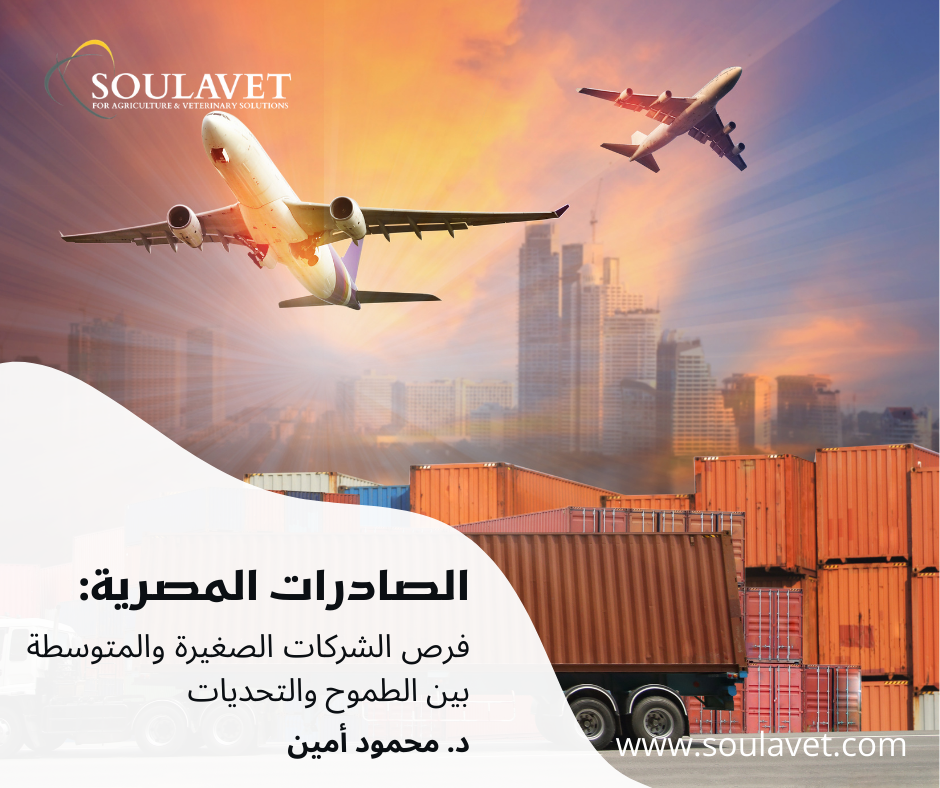
Egyptian Exports: Opportunities for SMEs Between Ambition and Challenges
 By
By 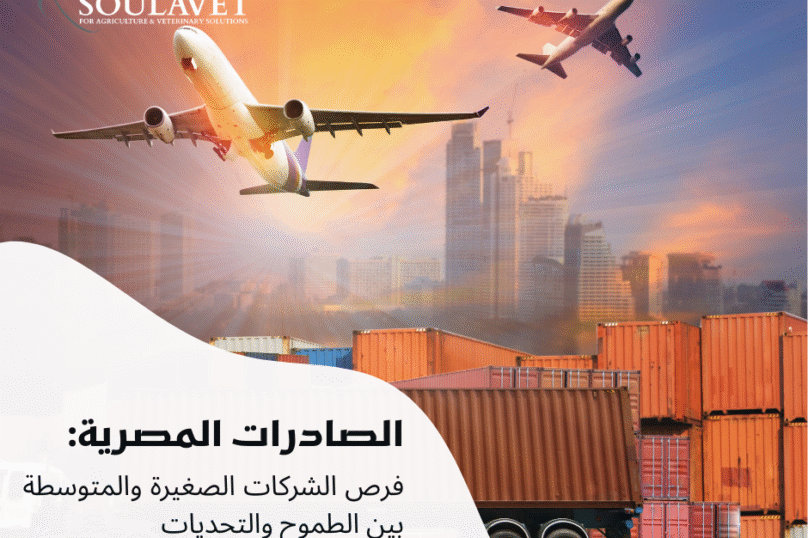
By Dr. Mahmoud Amin — Marketing and International Trade Consultant, SOULAVET
Executive Summary
Exporting is no longer a luxury; it is a key driver of Egypt’s economic growth. According to data from the Central Agency for Public Mobilization and Statistics (CAPMAS, 2023), non-oil exports reached approximately $35.7 billion. This figure reflects the diversity of Egyptian products and the growing global demand for them.
Although major exporters dominate a significant portion of these numbers, small and medium-sized enterprises (SMEs) form the backbone of the Egyptian economy, accounting for more than 80% of the private sector (World Bank, 2022). This raises an important question: how can these companies establish a foothold in global markets, especially with regional trade agreements such as AfCFTA and COMESA in place?
Types of Egyptian Exports
Agricultural Exports:
- Egyptian oranges leading global export rankings (Ministry of Agriculture, 2022).
- Potatoes, strawberries, and grapes.
Industrial Exports:
- Construction materials (marble, iron, cement).
- Plastic products and fertilizers.
Chemicals and Pharmaceuticals:
- Human and veterinary medicine exports (IMS Health, 2021).
- Chemical exports valued at $6.5 billion in 2022.
Textiles and Ready-Made Garments:
- Strong exports within the QIZ initiative with the United States.
Digital Services (Digital Exports):
- Software and outsourcing services, with Egypt ranked among top global destinations (Deloitte, 2023).
Opportunities for SMEs
- African and Arab markets: A market of over 1.3 billion people.
- Trade agreements: Customs exemptions and logistical facilitation.
- Government support: Export support programs and the “Start” initiative.
- Innovation flexibility: SMEs’ ability to adapt quickly to market needs.
Challenges and Warnings
- Bureaucratic procedures: Slow customs clearance and lack of document expertise.
- Unplanned pricing: Especially when relying on intermediaries.
- Weak financing: Difficulty in obtaining affordable funding.
- International standards: Low compliance with ISO and European regulations.
Practical Tips for SMEs
- Conduct a thorough study of target market needs.
- Choose an appropriate pricing system (FOB, CIF, DDP) based on experience and risk.
- Build a strong digital identity (website + presence on B2B platforms).
- Participate in international trade fairs to connect directly with importers.
- Establish local partnerships in target markets.
How Can SOULAVET Help?
Given these challenges, SOULAVET understands that SMEs need more than general advice—they need comprehensive practical solutions. That’s why we provide:
- End-to-end export solutions: From preparing export files to shipping products.
- Digital identity building: Professional website design and social media pages suited for international markets.
- Well-planned international marketing strategies: To reach new customers in Africa, the Gulf, and Europe.
- Operational and financial consulting: To ensure sustainable growth and convert deals into long-term contracts.
We don’t just act as consultants; we position ourselves as a true partner helping companies turn opportunities into tangible successes.
Conclusion
Egyptian exports are not limited to large corporations; they are an open space for SMEs if they have the right tools. With the right partners, these companies can evolve from local players to influential global exporters.
Is your SME ready to transform export opportunities into tangible global success ❓
At SOULAVET, we believe that exporting is not just about reaching new markets, but about providing the right strategy, building credibility, and turning every export deal into long-term growth.
Soulavet — Turning Vision into Asset
#سولافيت #soulavet #محمودأمين#mahmoudamin